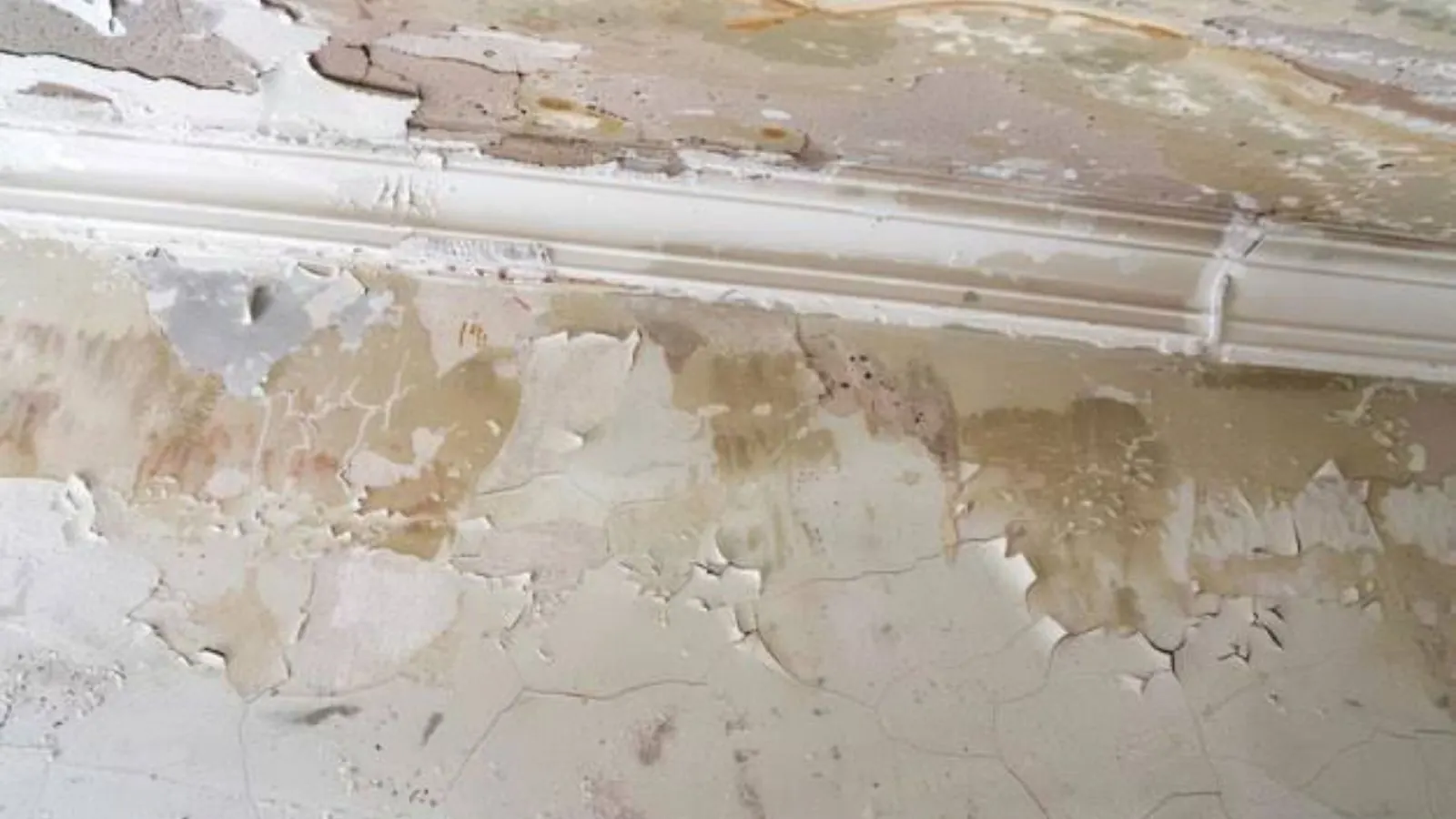
Drywall Water Damage Repair in Acton, MA: Dry, Cut, Replace
Drywall that is wet can sometimes be dried in place, but it must be replaced if it is soft, crumbling, sagging, moldy or soaked with contaminated water. The deciding factors are how long it stayed wet, what kind of water it was and whether it is still firm. Gypsum board is paper and plaster, and it weakens quickly once saturated.
This guide covers how to judge the damage, how a cut-out and patch goes and when to call a crew. If the loss is large, water damage repair explains the full rebuild after drying. If water is still present, drying comes first.
How To Judge Wet Drywall
| Condition | Usual decision | Reason |
|---|---|---|
| Damp, firm, clean water, caught within a day or two | Dry in place and monitor | Drywall can recover if dried quickly |
| Soft, swollen or crumbling | Cut out and replace | The gypsum core has lost strength |
| Paint bubbling or seams separating | Open and check behind | Moisture is trapped behind the surface |
| Wet from sewage or flood water | Remove and discard | Contaminated porous material is not cleaned |
| Moldy | Remove and replace after fixing moisture | Mold grows into porous paper facing |
Based on common restoration practice and EPA mold guidance. A moisture meter and a technician decide on site.
EPA says to dry water-damaged areas within 24 to 48 hours to prevent mold growth. If a leak sat for several days, assume the inside of the wall is wetter than the surface suggests. A moisture meter gives a reading, and a small hole at the baseboard lets you look into the cavity.
Drying In Place
When drywall is firm and the water was clean, restorers often dry it without removal. Air movers blow across the wall, dehumidifiers reduce humidity and holes drilled near the baseboard let air reach the cavity. Readings are taken daily until the wall matches a dry reference. If the wall does not recover, it comes out.
Insulation inside the cavity may need to come out first. Fiberglass can often be dried, but wet cellulose or spray foam is harder, and the decision belongs to the technician on site. See water mitigation for how this stage works.
Wall wet or soft after a leak? Call the 24/7 line and a crew can check the moisture behind it.
☎ Call (978) 252-8637Cutting Out And Replacing Drywall
How a cut-out repair goes
- Turn off the power to the circuit and check for wiring or plumbing in the wall.
- Cut about 12 inches above the highest water line, since wicking carries moisture upward.
- Cut to the center of studs so new drywall has something to attach to.
- Remove wet insulation and let the cavity dry fully.
- Install new drywall, tape and mud the seams and sand between coats.
- Prime and paint, and match the texture if the wall has one.
Cutting above the waterline is standard because drywall wicks moisture upward like a paper towel. Measure the visible stain and add height beyond it. If the wall has baseboard, remove it carefully so you can reuse it. Do not skip the drying step before you close up the wall.
Mold is the main risk of closing a wall too soon. If you see dark spots on the back of removed drywall or on the studs, stop and review EPA guidance. Small areas can be cleaned by homeowners, and anything larger needs a professional.
Shutoffs And Water Sources In Acton
The Acton Water District serves about 95 percent of the town from eleven wells and says an employee is on call 24 hours a day for emergencies. If the leak is on the main service line before your meter, that is who to contact.
Acton's hazard mitigation plan reports that 24 percent of housing units are renter-occupied. If you rent, a wall leak is usually reported to the landlord in writing first, and who pays for repairs depends on your lease, the cause and local law.
Cleaning Versus Throwing Away
Not every wet material in a wall has to be discarded. Studs and framing can be cleaned and dried. Plastic and metal can be wiped down. Insulation, drywall and trim that were contaminated usually go in the trash, and wet fiberglass that cannot be dried goes out as well.
If the water was clean and the response was quick, a company may save more materials. If it was a drain backup or flood water, expect more to be removed. Keep samples or photos of removed materials until your insurer says you can dispose of them.
Matching Texture And Paint
A new patch of drywall needs to blend with the old wall. Skim the edges with joint compound, feather it out several inches and sand lightly. Prime the new patch before painting, because bare joint compound absorbs paint differently than the old surface and shows as a dull spot.
Paint the whole wall from corner to corner if you can. Paint ages and fades, so a new coat on a small patch rarely matches. Painting to the nearest corner hides the transition and gives a more even result. If the wall has a texture, practice on a spare board before you apply it.
What Goes Wrong With DIY Drywall Repair
Most failures come from three things: closing the wall before it is dry, cutting too little and leaving wet drywall behind and skipping primer so the stain shows through. A fourth is not fixing the leak. If the pipe still drips, a new patch is just a bigger sponge.
Pipes in a wall are another risk. Before cutting, check for plumbing and wiring, and use a stud finder with a wire detector. If the wall holds a plumbing stack or panel, call a trade first. Neighbors in Maynard and Concord have the same wall-leak scenarios.
Insurance And Records
Photograph the wall before you cut. The Massachusetts Division of Insurance says to document damage and keep receipts, and that sudden interior water damage may be treated differently from gradual problems. Keep removed pieces if your insurer asks, and save your moisture readings if a company gives them.
Questions Acton Homeowners Ask
Sometimes. If it is firm, clean water and dried within a day or two, it can often be dried in place. Soft, swollen, contaminated or moldy drywall is replaced.
About 12 inches above the highest visible line, since drywall wicks moisture upward.
A moisture meter reading that matches a dry reference wall, and a dry inspection hole, tell you.
Wet insulation often needs removal. A technician can say whether it can be dried.
Yes. We offer water damage repair, including drywall, texture and paint. Scope and price are explained before work starts.
Wet Ceiling, Wall Or Floor In Acton?
Reading helps, but wet materials do not wait. Call the 24/7 line, describe what you see and hear what happens next.
☎ Call (978) 252-8637