How to Eliminate Mold in an Acton, MA Basement: Moisture Plan
To eliminate mold in a basement for the long term, control moisture. Cleaning removes what is there today, but humidity, drainage and leaks decide whether mold grows tomorrow. EPA says mold growth can be controlled indoors by controlling moisture, and it recommends keeping indoor relative humidity below 60 percent, ideally between 30 and 50 percent. This page is a moisture plan for an Acton basement.
If mold is already present, remove it first. The cleanup sequence is in our guide on mold remediation. This page is about what you do afterward, or before mold appears, so you are not cleaning the same wall again next spring.
Measure Before You Spend Money
A hygrometer that costs $10 to $50 is the cheapest tool in the plan. Put one at head height in the basement and read it over a few weeks. If the number stays under 60 percent, your main risk is leaks. If it climbs into the 60s or 70s in summer, you have a humidity problem, and a dehumidifier or better ventilation will matter more than a repair.
| Reading | What it suggests | Usual action |
|---|---|---|
| 30 to 50 percent | Target range | Keep monitoring |
| 50 to 60 percent | Acceptable, close to the upper limit | Run a dehumidifier in humid months |
| Above 60 percent | Mold-friendly conditions | Dehumidify and find sources of moisture |
| Spikes after rain | Groundwater or drainage entering | Check grading, gutters, sump pump and wall base |
Targets from EPA guidance. A reading is only a signal. A technician can find the source.
Fix The Water Outside First
An exterior checklist for basement dryness
- Clean gutters and extend downspouts several feet away from the foundation.
- Make sure soil slopes away from the house, not toward it.
- Clear leaves from window wells and make sure they drain.
- Check that nearby catch basins are not blocked by debris, ice or snow.
- Do not stack firewood or mulch against the foundation wall.
Interior fixes support these but cannot replace them. A dehumidifier that runs all summer to remove water that is entering through a wall is treating a symptom. If you see water on the floor after heavy rain, it is time to talk to a drainage or waterproofing contractor, as restoration does not stop groundwater from entering.
Sump Pumps And Power
A sump pump is the one machine that stands between a wet spring and a flooded finished basement. Test it every season by pouring a bucket of water into the pit and confirming it kicks on and discharges outdoors. Consider a battery backup, because storms that raise groundwater often cut power at the same time.
Water on the basement floor right now? Call the 24/7 line before it soaks into walls and stored items.
☎ Call (978) 252-8637Acton's Wet Seasons And Dams
Acton's hazard mitigation plan notes that the town's River Street Dam on Fort Pond Brook backs up and floods in spring. The town owns it, and the plan says a breach is in early planning. The plan also says the Ice House Pond dam is low hazard and that the town draws the pond down before storms.
A 2023 storm that the town's trails page estimated at 4.1 inches of rain washed out a culvert at Camp Acton and flooded the Assabet River trail and canoe launch. After a storm like that, check your basement for new dampness a few days later, because groundwater can rise after the rain stops.
A Season-By-Season Routine
| Season | What to check |
|---|---|
| Spring | Test the sump pump, clear gutters, walk the basement after snowmelt and heavy rain |
| Summer | Watch humidity, run the dehumidifier, empty its drain or bucket often |
| Fall | Clean gutters again, extend downspouts, move stored items off the floor |
| Winter | Check for condensation on cold walls and pipes, keep snow away from the foundation |
Adjust for your house. A basement near a brook may need more frequent checks.
A routine matters because mold usually returns slowly. A damp corner in July becomes a stain by September and a visible patch by winter. Catching the damp corner in July means a dehumidifier setting or a downspout extension is the whole fix.
Write each check on a calendar or phone reminder, and note the humidity reading at the same time. A year of readings will show you which season is a problem and whether your fixes are working.
Finished Basements Need Extra Care
A finished basement hides walls, so moisture problems stay out of sight. Leave a gap of an inch or two between flooring and the wall where you can, keep furniture a few inches from exterior walls and use moisture-resistant materials near the floor. Paneling and carpet over a bare concrete slab are the most common sources of musty smells.
If you plan to finish a basement, address the water first. Finishing over a seep or a damp slab hides the problem and invites mold behind new walls. A drainage or waterproofing contractor can tell you whether the basement is dry enough for finishing.
None of this needs special skill. It needs a hygrometer, a calendar and the habit of looking at the basement after every large storm, which is when problems show first.
Dehumidifier Choice And Placement
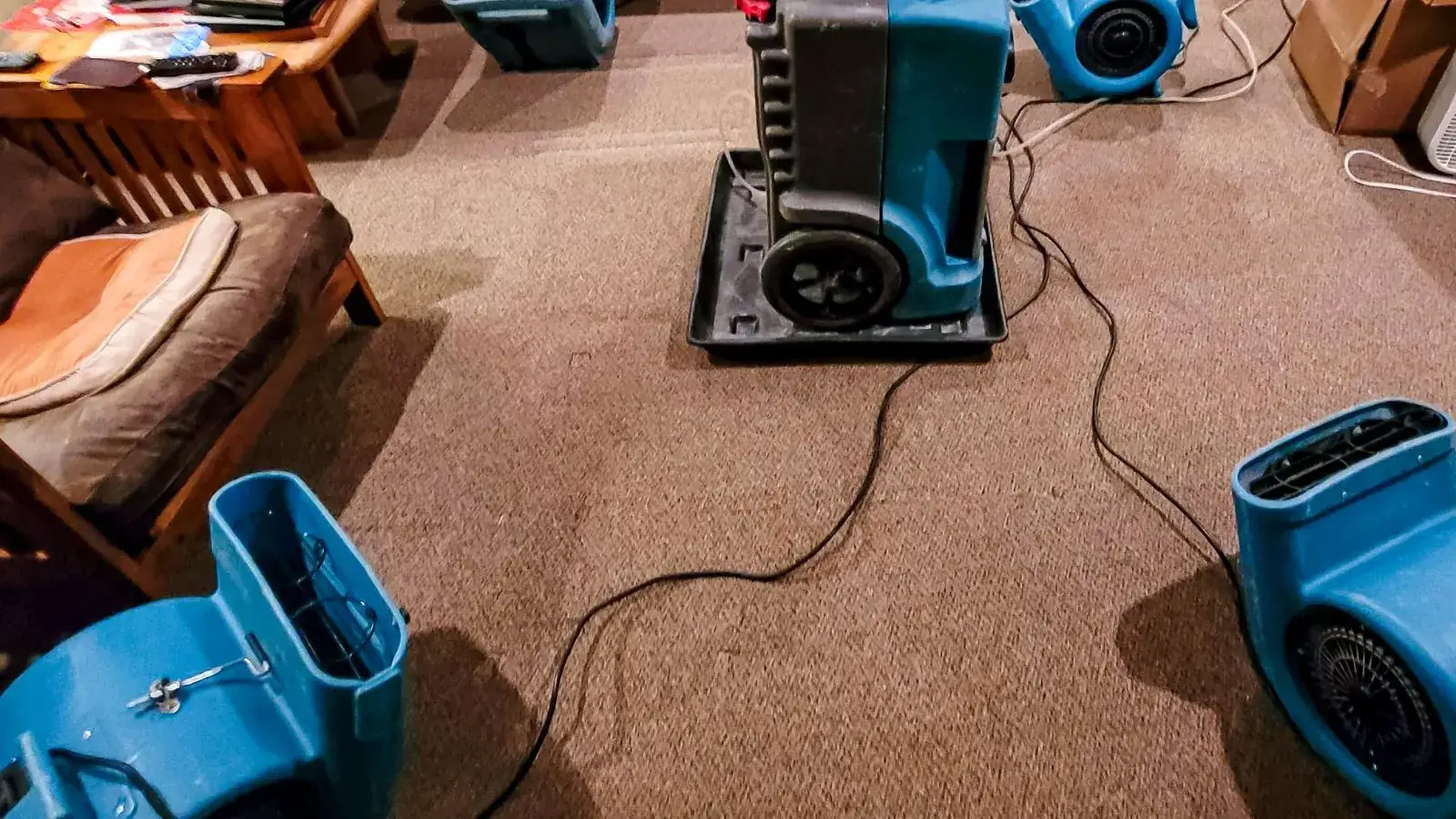
A residential dehumidifier is sized by how much water it removes and the size of the space. A unit with a drain hose that empties into a floor drain or pump is better than one with a bucket you must empty. Place it in the middle of the room with space around it, and keep the door to the room open so air circulates.
If you have already had water damage and mold is likely behind a finished wall, the room may need professional drying and inspection. See water mitigation for how structural drying works. Our pages for Westford and Littleton describe the high water table and drainage conditions nearby.
What You Cannot Promise Yourself
No plan guarantees mold will never return. Weather changes, pipes age and sump pumps fail. What a plan does is lower the odds and make problems visible early. Keep a log of readings, test the pump each season and walk the basement after every large storm.
Questions Acton Homeowners Ask
EPA recommends keeping indoor relative humidity below 60 percent, ideally between 30 and 50 percent.
No. It reduces humidity but does not remove existing mold or stop water entering through a wall. Fix sources first and clean or remove mold.
At least once each season, and before spring thaw. Pour in water and confirm it starts and discharges properly.
Yes. The emergency line is answered 24/7, with same-day response offered when available.
No. Restoration removes water and repairs damage. A waterproofing or drainage contractor addresses how water enters.
Mold Or Moisture Problem In Acton?
A guide can size up a small patch. For larger growth or a wall that stays wet, call the 24/7 line and we will walk through the plan.
☎ Call (978) 252-8637