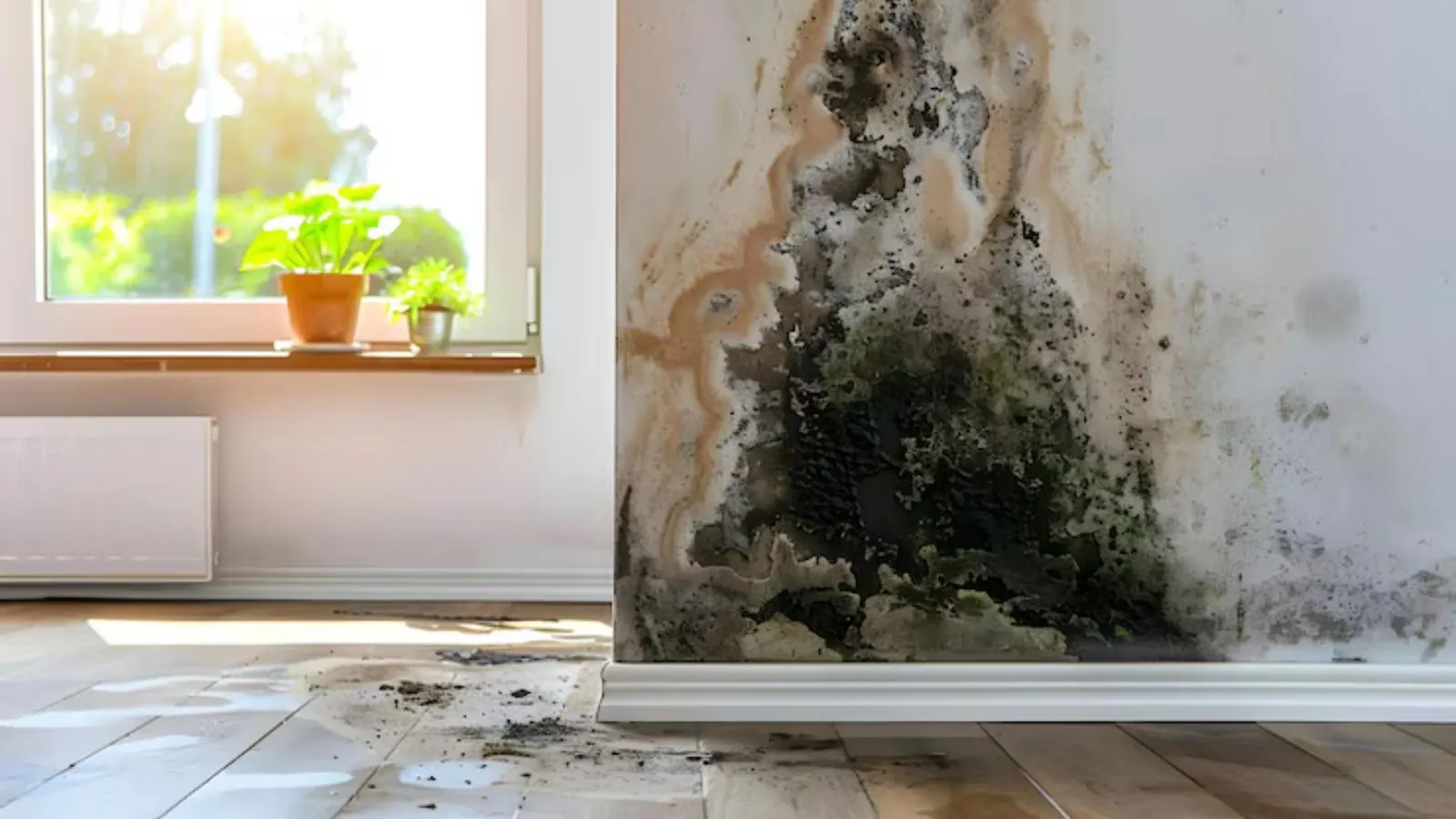
How to Remove Mold in an Acton, MA Home: Bathrooms, Closets and More
To remove mold in a home, fix the moisture, then clean hard surfaces with detergent and water or discard porous materials that cannot be cleaned. EPA says many people can handle an area of less than about 10 square feet, while larger areas, hidden mold or flood and sewage water call for a professional. Each room has its own typical cause.
Our guides on basement mold cover that space. This one covers the rest of the house: bathrooms, closets, windows and ceilings. If you want the contained-removal process, see mold remediation.
Bathrooms
Bathroom mold is mostly a ventilation issue. Showers produce steam that condenses on cool ceilings and corners. Run the exhaust fan during and for 20 to 30 minutes after a shower, make sure it vents outdoors and not into the attic and wipe wet surfaces. Replace failing caulk, since mold under caulk often needs removal of the caulk to clean.
On tile and grout, scrub with detergent and water, rinse and dry. On a painted ceiling corner, wipe, dry and prime with a mold-resistant primer once the surface is clean and dry. If drywall behind the tub is soft, mold is growing inside the wall, and it needs to be cut out.
Closets And Exterior Walls
Closets on exterior walls are cold, and humid air condenses on the wall behind clothes and boxes. Pull items away from the wall, leave a few inches for air and keep the closet door open now and then. A small dehumidifier or a moisture absorber helps in humid months.
If mold is on clothes, shoes or fabric, launder or dry-clean what can be cleaned and discard what cannot. Check the wall behind the closet for water from a roof, a window or a pipe. If the exterior wall is wet, the source must be fixed.
| Room | Usual cause | First fix |
|---|---|---|
| Bathroom | Steam and poor ventilation | Run the fan and make sure it vents outdoors |
| Closet | Cold exterior wall and stagnant air | Create airflow and reduce humidity |
| Window frames | Condensation | Wipe daily in winter, improve ventilation |
| Ceiling | Roof leak or plumbing leak | Find the source before cleaning |
| Laundry room | Humidity and leaking hoses | Check hoses, vent the dryer outdoors |
Based on common causes and EPA moisture-control guidance.
Mold on a ceiling after a leak? Call the 24/7 line and we will check how far the moisture went.
☎ Call (978) 252-8637Windows And Ceilings
Window sills collect condensation in winter. Wipe it daily, use a dehumidifier and seal drafts around the frame. Mold on a ceiling is different: it usually means a leak above or poor attic ventilation. Cleaning the surface does not fix a wet ceiling, so the source needs attention first. See our guides on finding a ceiling leak source and what mold looks like.
A safe small-area cleanup
- Fix the leak or humidity cause first.
- Wear gloves, eye protection and an N95 respirator.
- Do not mix bleach with ammonia or other cleaners.
- Scrub hard surfaces with detergent and water, then dry them fully.
- Discard moldy drywall, ceiling tile and carpet.
- Stop and call a professional if the area is larger than about 10 square feet.
Flood-Prone Spots And Humidity In Acton
Acton's hazard mitigation plan names Stow Street and Martin Street as flooding roughly every three to four years, along with Great Road near Wetherbee Street and Flint Road. Homes near those low spots carry higher ground moisture after storms, and humidity inside can rise with it.
The same plan notes that nearly every brook in town has had beaver activity, which can back up water and raise the water table. If your home is near a brook, check humidity after wet weeks and consider a dehumidifier even in rooms above the basement.
Laundry Rooms And Kitchens
Laundry rooms collect moisture from dryers that vent poorly and washing machine hoses that weep. Check that the dryer vents outdoors, replace old rubber hoses with braided ones and look behind the machine once a year. Mold behind a washer is a hidden problem until the smell gives it away.
In kitchens, look under the sink and behind the dishwasher and refrigerator. A slow drip from a supply line or ice maker tube can wet cabinets and flooring for months. Wet cabinet bottoms, swollen particleboard and a musty smell are the signs. Plan to replace swollen cabinet material, because it cannot be dried back to strength.
Cleaning Tools And Safety
Basic kit for a small cleanup
- N95 respirator, gloves and eye protection.
- Detergent, water, a bucket and scrub brush.
- Heavy trash bags for discarded materials.
- A fan placed in a window, blowing outward.
- A HEPA vacuum for fine dust after scrubbing.
Keep children, pets and anyone with health concerns away from the work area. If you reach a point where the job is larger than expected, stop. A job that grows beyond about 10 square feet or reveals water-damaged framing is a sign to call a professional.
Why Mold Returns In The Same Spot
When mold returns to the same corner, the cause was never fixed. A bathroom fan that vents into the attic, a window that sweats every night or a closet against a cold wall will keep making the conditions. Cleaning once gives a few weeks of relief at best.
Keep a short log of when mold comes back and what the weather and humidity were. After two or three entries a pattern usually shows, and the pattern points to the fix. If it does not, a technician with a moisture meter can look for hidden sources.
When To Call A Professional
Call a professional if the mold covers more than about 10 square feet, if you suspect it is behind walls, if water was contaminated or if anyone in the home has health concerns. EPA advises talking to a health professional before cleanup in that case. A crew can contain the area, filter the air and remove the damaged material.
After removal, water damage repair rebuilds what was removed. Homeowners in Westford and Concord apply the same room-by-room approach, with the same limit: fix moisture first.
Questions Acton Homeowners Ask
Fix ventilation, wipe with detergent and water, dry and prime. If the drywall is soft or the mold keeps returning, it may need replacement.
Sometimes. It is often condensation on a cold exterior wall, but check for roof, window or pipe leaks.
EPA says many people can clean less than about 10 square feet. Larger areas call for a professional.
EPA does not recommend bleach as a routine part of mold cleanup. Never mix bleach with ammonia.
Call the 24/7 line. Scope and price are explained before work starts.
Mold Or Moisture Problem In Acton?
A guide can size up a small patch. For larger growth or a wall that stays wet, call the 24/7 line and we will walk through the plan.
☎ Call (978) 252-8637