How to Remove Mold From a Basement in Acton, MA by Surface
How to remove mold from a basement depends on what the mold is growing on. Hard, non-porous surfaces such as sealed concrete and metal can usually be cleaned. Porous materials such as drywall, carpet, insulation and cardboard usually have to be removed and replaced. That surface-by-surface rule is the practical core of EPA's mold guidance, and it is more useful than any single cleaning recipe.
This page assumes the patch is small enough to handle yourself, under about 10 square feet per EPA. Larger or hidden mold is a job for a professional, and mold remediation explains how that works. Fix the moisture source first, whatever the surface.
Concrete And Block Walls
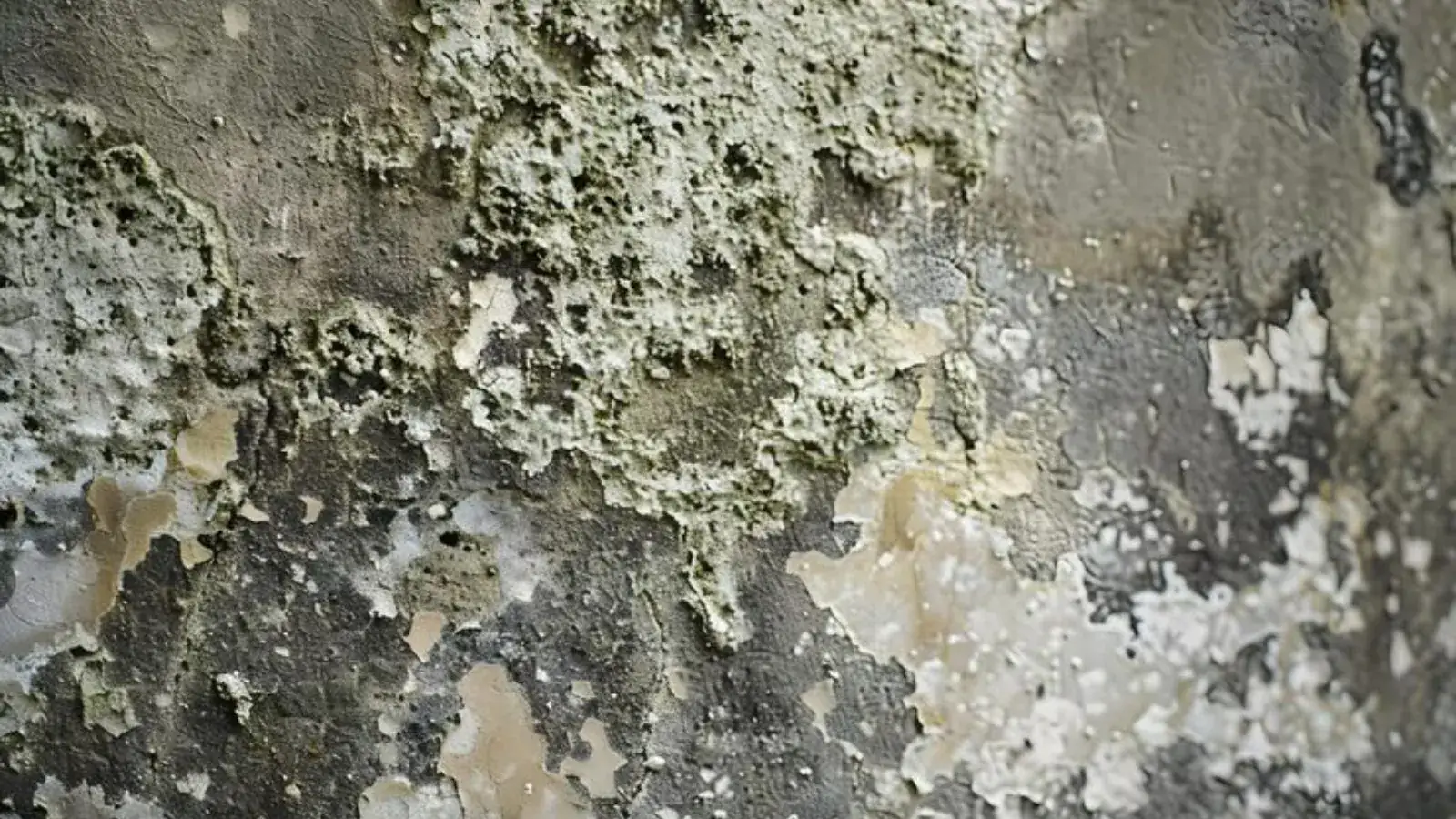
Poured concrete and block walls hold dark stains, but not all stains are mold. White crusty deposits on basement block are often efflorescence, which is mineral salt left by moving water, and they point to moisture even though they are not mold. Brush them dry and watch where they return, because the pattern shows where water is entering.
For real mold on concrete, scrub with detergent and water, rinse and dry the surface completely. EPA does not recommend bleach as a routine part of cleanup, and dead mold still needs to be removed, not just killed. Dry the wall with a dehumidifier before you paint, because sealing a damp wall hides the problem.
Framing, Plywood And Wooden Shelves
Solid wood can often be cleaned if mold is on the surface and the wood is still sound. Scrub, dry fully and look for soft spots. A screwdriver that sinks easily into a joist or sill plate means rot, and structural wood is a job for a contractor, not a cleaning task. Plywood and particleboard shelves are cheaper to replace than to clean.
Drywall, Insulation And Carpet
Porous materials absorb mold deeper than the surface. If drywall or paneling has visible mold across a patch, plan to cut it out and replace it. Insulation that was wet and moldy goes out. Carpet and carpet pad that grew mold usually go too. Bag the material in heavy plastic before carrying it through the house to limit spreading spores.
| Surface | Usually cleaned or removed | Key point |
|---|---|---|
| Sealed concrete or block | Cleaned | White crust may be efflorescence, not mold |
| Solid framing lumber | Cleaned if sound | Probe for soft spots |
| Drywall or paneling | Removed | Porous, mold goes deeper than it looks |
| Insulation | Removed | Holds moisture and cannot be cleaned |
| Carpet and pad | Removed | Hard to dry and clean thoroughly |
| Cardboard and paper | Discarded | Mold embeds in fibers |
Based on EPA mold guidance and common restoration practice. A technician decides on site.
Mold on more than one surface, or in a wall you cannot see? Call the 24/7 line before you start cutting.
☎ Call (978) 252-8637Stored Items And What To Do With Them
Boxes, books, fabrics and furniture stored in a damp basement are the most common mold casualties. Hard items like plastic bins, metal and glass can be wiped and dried. Fabric, upholstered pieces and paper are often easier to replace than to clean. If something is valuable or sentimental, ask a restoration company about cleaning options before you throw it away.
A safe order of work for a small cleanup
- Fix the leak, seep or condensation that fed the mold.
- Remove and bag moldy porous materials and stored items.
- Clean hard surfaces with detergent and water and dry them completely.
- Run a dehumidifier and a fan to bring humidity below 60 percent, ideally 30 to 50.
- Recheck in a week and again after the next heavy rain.
What Acton's Flood Maps Mean For A Basement
Acton's hazard mitigation plan lists FEMA Zone A and Zone AE areas along Fort Pond Brook, Nashoba Brook, the Boxborough boundary and the northern tip of town. If your basement is in or near one of those mapped areas, the town's GIS viewer and the FEMA flood map for your address will show it.
Even outside a mapped zone, basements can take on water. The plan identifies five repetitive loss structures in town, all single-family homes, with 13 losses between 1987 and 2010 totaling $60,396. Repeated wetting is what turns a one-time cleanup into a recurring mold problem, so fixing drainage matters more than the surface you scrub.
Supplies And Protective Gear
| Item | Purpose | Note |
|---|---|---|
| N95 respirator | Reduces inhaling dust and spores | Fit matters, so follow the package directions |
| Gloves and eye protection | Protects skin and eyes from cleaners and debris | Goggles without vent holes are better than glasses |
| Detergent and water | Cleans hard surfaces | Rinse and dry afterward |
| Heavy plastic bags | Contain discarded materials | Double-bag wet or crumbling pieces |
| HEPA vacuum | Captures fine dust after cleaning | A regular vacuum can blow spores around |
| Fan and dehumidifier | Dries the area | Vent the fan outdoors |
Never mix bleach with ammonia or other cleaners.
None of this equipment is exotic, and most of it can be bought at a hardware store in one trip. The one item worth borrowing or renting if you do not own it is a HEPA vacuum. After scrubbing, fine dust settles on every surface, and a HEPA vacuum is the safest way to pick it up.
Wash work clothes separately in hot water, and shower after finishing. If you notice symptoms during the cleanup, stop and talk to your physician. We do not make health claims about mold.
When To Stop And Call
Stop if you find mold across a large area, if the wall behind the drywall is wet, if the material crumbles when you press it or if the water was sewage. Also stop if anyone in the house has health concerns, because EPA advises talking to a health professional before cleanup. A crew can contain the area and remove material without spreading it.
If wet materials come out and the basement needs a rebuild, water damage repair covers the next stage. Homeowners in Maynard and Concord face the same surface-by-surface decisions in older basements.
Questions Acton Homeowners Ask
Often it is efflorescence, a mineral salt left behind by moving water. It is not mold, but it signals moisture and the wall should be watched.
No. Paint hides mold without removing it, and a damp wall will fail the paint. Clean and dry the surface first.
EPA guidance treats porous materials as hard to clean. Most visibly moldy drywall is removed and replaced.
Check the FEMA flood map for your address and use Acton's GIS viewer. Your insurance agent can tell you what applies to your property.
EPA recommends below 60 percent, ideally between 30 and 50 percent.
Mold Or Moisture Problem In Acton?
A guide can size up a small patch. For larger growth or a wall that stays wet, call the 24/7 line and we will walk through the plan.
☎ Call (978) 252-8637