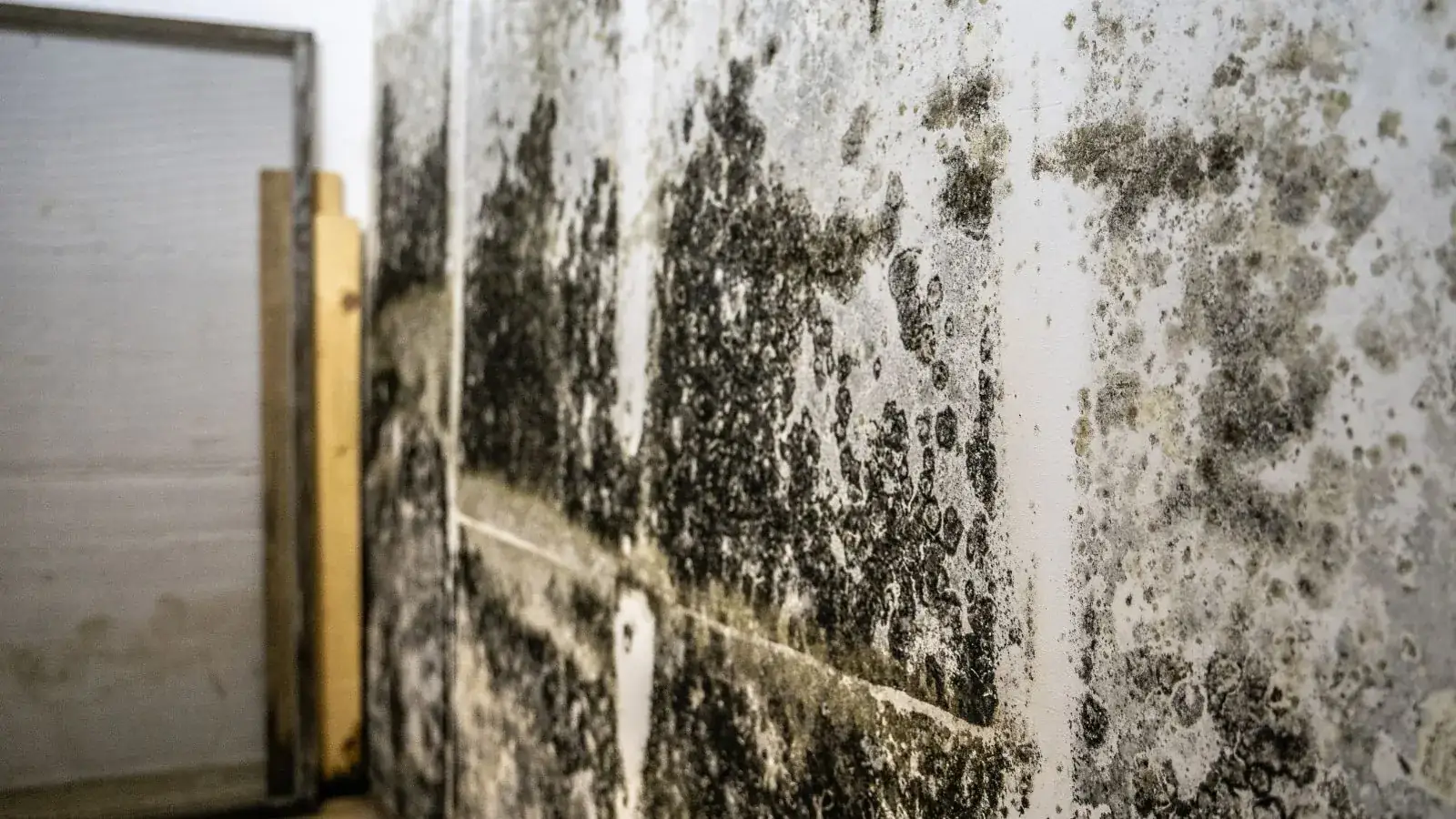
To remove mold from an Acton basement, find and fix the moisture source, measure the affected area, then either clean it yourself if it is under about 10 square feet or hire a professional if it is larger. That sequence comes from EPA mold guidance, and skipping the first step is why mold returns. Cleaning a patch while a foundation seep or a damp wall keeps feeding it only resets the clock.
This guide covers how to size the problem, what a homeowner can safely do and when containment and a trained crew are the better choice. If you are looking at mold now and water is also present, mold remediation explains how contained removal works.
Step One: Find What Is Making The Wall Damp
Mold needs moisture, so look for the water before you look at the mold. In a basement the usual causes are groundwater seeping through a wall or floor joint, condensation on cold pipes and walls, a leaking appliance or pipe, and a clogged gutter or poor grading outside. A flashlight and a humidity meter that costs $10 to $50 will tell you more than a guess.
EPA recommends keeping indoor relative humidity below 60 percent and ideally between 30 and 50 percent. If your meter reads higher than that in July, the cause may be condensation, not a leak. A dehumidifier with a drain hose and better airflow often addresses that cause.
Step Two: Measure And Decide
EPA says many people can clean mold themselves if the area is less than about 10 square feet, which is roughly a patch three feet by three feet. Beyond that, or if there has been a lot of water damage, it recommends a professional with mold experience. If the water was sewage, it says to use a professional with experience in that kind of damage.
| What you find | Reasonable next step | Why |
|---|---|---|
| Small spots under about 10 square feet on a hard surface | Fix the moisture, then clean following EPA guidance | Small, contained and easy to reach |
| Mold on drywall, carpet or insulation | Plan to remove and replace the material | Porous materials hold mold deeper than the surface |
| Mold over a large area or behind finished walls | Call a professional for containment and removal | Spores spread when disturbed |
| Mold after sewage or flood water | Professional with contaminated-water experience | EPA advises it for sewage |
Based on EPA mold guidance. A site visit can confirm what applies in your basement.
What A Homeowner Can Safely Do
A careful small-area cleanup
- Fix the leak or condensation source first.
- Wear gloves, eye protection and an N95 respirator, and keep children and pets away.
- Ventilate with a window fan pushing air outdoors, not into the house.
- Scrub hard surfaces with detergent and water, then dry them completely.
- Bag and discard porous materials such as carpet or ceiling tile that are moldy.
- Never mix bleach with ammonia. EPA does not recommend bleach as a routine part of mold cleanup.
Killing mold is not the same as removing it, so cleaning has to take the growth off the surface. Health questions belong to your physician, and if anyone in the house has health concerns, EPA advises talking to a health professional before starting cleanup.
Not sure whether your basement mold is a small job? Call the 24/7 line and describe where it is and how big it looks.
☎ Call (978) 252-8637When The Job Needs Containment
A larger or hidden problem is handled differently. Technicians seal the work area with plastic barriers, run negative air machines with HEPA filtration so spores do not drift upstairs, remove mold-damaged porous materials, HEPA vacuum and damp wipe the remaining surfaces and then dry the space. The process follows the ANSI/IICRC S520 standard, and you can ask any company whether its crews work to it.
Do not run the furnace or air handler if you suspect it is contaminated, because ductwork can spread spores through the building. And if the basement was wet for more than a day or two, tell the crew when the water arrived. That timeline helps them judge how far mold may have traveled.
Why Acton Basements Get Damp
Acton's 2018 hazard mitigation plan rates flooding as a high-frequency hazard and says roadways flood about every other year, though they usually remain passable. The same plan notes that freezing temperatures followed by rain can block catch basins, which pushes water toward foundations instead of storm drains.
The plan also points out that nearly every brook in town has had beaver activity. Water that backs up behind a dam spreads into low ground and raises the water table near nearby houses. If your basement is near a brook, a wet spring is the time to check it. Keep a humidity meter down there and look at the wall base after heavy rain.
How Fast Mold Can Appear
EPA says water-damaged areas should be dried within 24 to 48 hours to prevent mold growth. That window is short, which is why a basement that stayed damp after a storm can show fuzzy growth within a few days. If you found mold, ask yourself when the area last got wet, because the answer tells you how far the problem may have spread.
A basement that floods once and dries fast usually has less hidden growth than one that stayed damp for weeks. Carpet, cardboard boxes and the bottom few inches of drywall are the first places to look. Pull back a corner of carpet or remove a baseboard in an inconspicuous spot to see what is behind it.
Protect The Rest Of The House While You Work
Keep spores downstairs
- Close the basement door and tape plastic sheeting over the doorway if you have it.
- Turn off the furnace fan while you work if the air handler sits in the basement.
- Open a basement window and place a box fan in it, pointing outward.
- Bag debris in heavy plastic before carrying it upstairs and out.
- Wipe your shoes and change clothes before returning to the living area.
These steps are not a replacement for containment on a larger job. They only reduce the chance that a small cleanup spreads dust and spores upstairs. If you cannot keep the work area closed off, that is a sign the job may be bigger than a homeowner task.
After Cleanup: Keep The Basement Dry
Once the mold is gone, the moisture source decides whether it stays gone. Extend downspouts away from the house, keep the soil sloping away from the foundation, run a dehumidifier in humid months and keep stored items off the floor and away from walls. We cannot promise mold will never return, because only controlling moisture does that.
If the wall keeps seeping, the long-term fix belongs to a waterproofing or drainage contractor, and restoration comes in to remove what the water damaged. After wet drywall or carpet has come out, water damage repair rebuilds the space. Neighbors in Concord and Boxborough deal with the same basement conditions.
Questions Acton Homeowners Ask
EPA says many people can clean an area of less than about 10 square feet. If the area is larger or there has been a lot of water damage, it recommends a professional.
If mold is visible, EPA says testing is usually unnecessary. Testing can help after cleanup to confirm an area was cleaned, but professionals with specific experience should do it.
EPA does not recommend bleach as a routine part of mold cleanup. Killing mold is not the same as removing it, so the growth needs to be taken off the surface.
Condensation on cold walls and pipes is common in humid months, and a high water table can keep soil wet for weeks after a storm. A humidity meter and a dehumidifier help you tell which one it is.
The line is answered 24/7 and same-day response is offered when available. Mold itself is rarely an emergency, but the water that caused it can be.
Mold Or Moisture Problem In Acton?
A guide can size up a small patch. For larger growth or a wall that stays wet, call the 24/7 line and we will walk through the plan.
☎ Call (978) 252-8637