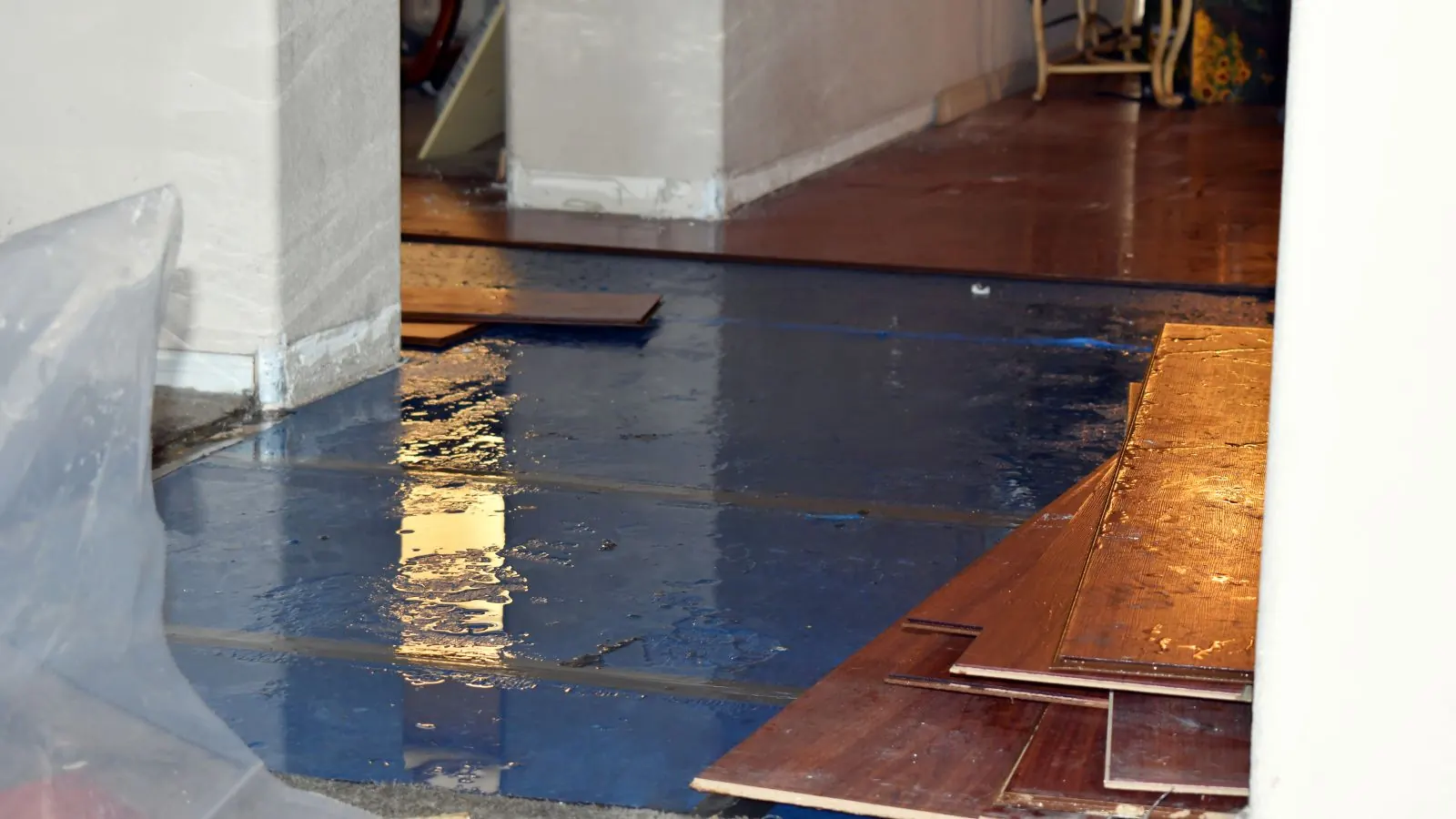
Water Damage to a Wood Floor in Acton, MA: Dry or Replace It
Water damage to a wood floor can sometimes be reversed if the floor is dried quickly, and often cannot if boards have buckled, delaminated or stayed wet for days. The sooner the floor is dried, the better the odds. Hardwood absorbs water through the edges and the underside, so the damage is often worse than the surface suggests.
This page explains the signs, the options and how professional drying of floors works. For wider drying principles, see our water mitigation page, and for the rebuild afterward, water damage repair.
What The Floor Is Telling You
| Sign | What it means | Usual outcome |
|---|---|---|
| Cupping (edges higher than the center) | Moisture is coming from below or has been absorbed unevenly | Often flattens if dried slowly, but not always |
| Crowning (center higher than edges) | Often follows cupping after sanding, or surface moisture | May need sanding after drying |
| Buckling (boards lifting off the subfloor) | Severe moisture and expansion | Often requires replacement of sections |
| Dark staining or black spots | Water or mold under the finish | Depends on depth, may need replacement |
| Gaps after drying | Boards shrank after swelling | Can be acceptable or need refinishing |
A guide, not a diagnosis. A technician uses moisture meters to decide.
First Hours: What To Do
Steps in the first day
- Stop the water source and remove standing water.
- Lift area rugs and remove furniture, with felt pads under legs if you must leave it.
- Run fans and a dehumidifier. Do not use a heater to force dry the floor.
- Keep foot traffic off the wet boards.
- Photograph the floor for your insurer before anything changes.
Fast, gentle drying is better than fast, hot drying. Heat can crack boards and cause severe cupping. Crews use specialized mats and panels that pull moisture out of the floor from the top, sometimes with the water vented under the floor. The goal is to bring the boards back to a normal moisture reading slowly.
EPA says to dry water-damaged areas within 24 to 48 hours to prevent mold growth. If the floor sat wet longer than that, check the underside through a basement or crawl space ceiling. Mold on the subfloor underneath is common when the floor stayed wet.
Water on a wood floor right now? Call the 24/7 line. Faster drying gives boards a better chance.
☎ Call (978) 252-8637Dry, Refinish Or Replace
If the floor recovers, you may need only light sanding and refinishing. Wait until the boards are fully dry and stable, which can take weeks, because refinishing a damp floor can lock in problems. If cupping persists after drying, sanding the floor flat is the usual next step.
If boards have buckled or the subfloor is damaged, those sections are replaced. Matching an old floor is often the hardest part, especially if the wood is old growth or the finish has aged. Ask a flooring professional about blending new boards into existing ones and whether the whole room needs refinishing.
Engineered wood and laminate behave differently. Laminate swells at the edges and usually cannot be saved once it absorbs water. Engineered wood has a plywood core that can sometimes be dried, but a thin veneer often delaminates. Tell the crew what type of floor you have.
Where Acton Floors Get Wet
Acton's hazard mitigation plan notes that the town's housing is largely single-family, with about 8,200 housing units overall. Many homes have hardwood on the first floor above a basement, so a basement seep after a wet spring can cup a floor from below.
The plan also lists flood-prone roads including Stow Street and Martin Street, which flood roughly every three to four years, and Great Road near Wetherbee Street. Homes near those low spots can see groundwater rise under a first floor after heavy storms. A dehumidifier in the basement is a reasonable precaution.
Check The Underside
A floor can look fine on top while the subfloor stays wet. If your floor sits over a basement or crawl space, look at the underside of the subfloor with a flashlight. Dark staining, fuzzy growth or damp insulation between joists show that water got through, and that moisture must dry too.
Water also travels under floors to places that did not get wet on the surface. A technician can use meters on the subfloor, and sometimes lift a board at the edge to look. Closing a floor over a wet subfloor is how mold becomes a second problem.
Aftercare Once The Floor Is Dry
Protecting a recovered floor
- Wait for stable moisture readings before sanding or refinishing.
- Keep humidity in the home steady, ideally between 30 and 50 percent.
- Put mats under sinks, refrigerators and entry doors.
- Wipe up spills right away and avoid wet mopping.
- Check the floor after the next heavy rain or snowmelt.
Insurance, Photos And Moisture Readings
For a wood floor claim, photographs and moisture readings carry weight. Photograph the floor from above and from the side to show cupping, and record the date. A restoration company should give you moisture readings at the start and at the end of drying, so you can show the floor reached a normal range.
The Massachusetts Division of Insurance says sudden interior water damage may be treated differently from a gradual problem, so describe the cause carefully and accurately. Keep damaged boards if your insurer asks, and do not refinish until the claim and the drying are complete.
Patience is the underrated tool with wood floors. Boards that look worse in the first week often settle as they dry, and rushing a decision to replace or sand can cost more than waiting for stable readings.
When Water Came From Outside Or A Drain
If the water came from flooding, a sewer backup or a washing machine drain line, it carries contaminants. Hardwood finish does not make it clean, and boards that soaked in contaminated water are often removed. The Massachusetts Division of Insurance says flood damage and sewer backup are generally excluded unless you added coverage, so check before you decide.
Homeowners in Westford and Littleton with high groundwater see this on first floors above wet basements. The practical advice is the same anywhere: dry fast, avoid heat and check the underside.
Questions Acton Homeowners Ask
Often they flatten if the floor dries slowly and fully, and some need sanding. Severe cupping or buckling may need replacement.
No. Heat can crack boards and cause more damage. Use fans and dehumidifiers and let the floor dry gradually.
Until a moisture meter shows the boards are stable, which can take weeks. Sanding a damp floor can lock in problems.
Usually not. It swells at the edges and typically needs replacement.
Yes. Call the 24/7 line and we will explain scope and price before work starts.
Floor Or Structure Still Wet?
Drying is time sensitive. Call the 24/7 line and we will explain how the work would go before anything starts.
☎ Call (978) 252-8637