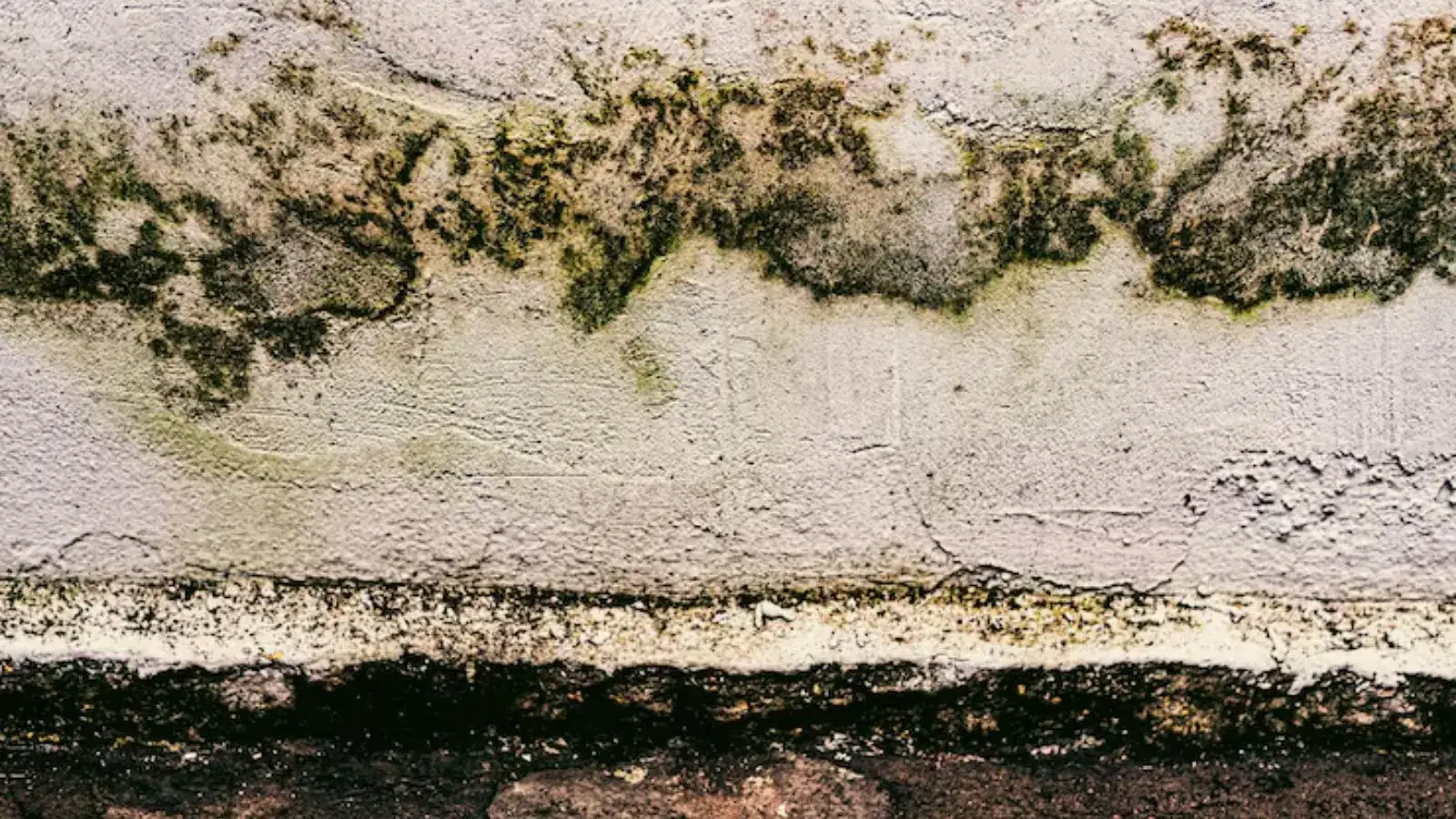
Mold usually looks like fuzzy, slimy or speckled spots in colors from white and green to gray, brown or black. It often appears in damp places, grows on walls, ceilings, grout, fabric and wood, and tends to come with a musty smell. Color alone cannot tell you what kind of mold it is, and only a lab can, but you do not need a species name to decide what to do next.
This guide covers how mold shows up in the rooms where Acton homeowners most often find it, what it can be confused with and what the next step is. If you find a patch, mold remediation explains when cleanup is a homeowner task and when it is a job for a crew.
Looks Like Mold, Might Be Something Else
| It looks like | It might be | How to tell |
|---|---|---|
| White powder on basement block | Efflorescence (mineral salt) | Dry brushing removes it, and it returns where water enters |
| Gray or black film on a bathroom ceiling corner | Mold or soap and dirt buildup | Wipe a small spot with detergent. If it returns or smells musty, suspect mold |
| Dark dots at window frames | Condensation mold or dirt | Check humidity and window condensation, then clean |
| Dark speckling on wood | Mold, staining or old water marks | Probe the wood and check moisture with a meter |
| Orange or pink slime in a shower | Common bathroom growth | Clean regularly and improve ventilation |
These are common look-alikes. A technician or tester can confirm what you have.
Where It Shows Up First
Calls about mold in this area tend to start in four places. A bathroom ceiling corner above the shower is the most common. Closet walls on an exterior wall come next, especially when furniture is pushed against them. Basement walls and stored items follow, and a window sill with condensation is the fourth. Each location tells you something about the cause.
In a closet or a bathroom the story is often a slow leak, such as a toilet seal, a sink supply line or a condensation line from an air handler. In a basement it is usually groundwater or humidity. Wherever you find it, look for the moisture before you start scrubbing.
Smell, Staining And Other Clues
Signs that point to mold even if you cannot see it
- A musty odor that returns after cleaning.
- Paint that bubbles, peels or discolors on a wall or ceiling.
- Warped or swollen baseboards and drywall.
- A recent leak, flood or spill that was not dried within a day or two.
- Condensation that keeps appearing on windows or cold walls.
EPA guidance says to dry water-damaged areas within 24 to 48 hours to prevent mold from growing. If a leak sat longer than that, look behind baseboards and under flooring. Mold hidden behind a wall can be bigger than the spot you see.
Found something dark and not sure what it is? Call the 24/7 line and describe where it is and what leaked.
☎ Call (978) 252-8637Acton's Older And Newer Homes
Acton's hazard mitigation plan reports about 10 percent of housing units were built before 1940, with about 8,200 housing units in total. Older homes may have plaster ceilings and original basements, where mold often shows as staining on plaster or on stone and block foundation walls.
Newer subdivisions, such as Nagog Woods in North Acton, usually have drywall, which absorbs moisture quickly and shows mold as dark spots that spread. If you are near a brook or pond, like the ponds at the Acton Arboretum, humidity near the house tends to run higher after rain.
How To Document What You Find
Photos and notes that help a technician
- A wide photo showing the room and where the growth sits.
- A close photo with a coin or ruler for scale.
- The date, the weather and the last time the area got wet.
- Whether the smell is stronger in the morning, after rain or after a shower.
- Any recent repairs, leaks or renovations nearby.
These details save time on a service call. They also help your insurer, who will ask when the damage began and what caused it. Do this before cleaning, because wiping the growth away removes the evidence of how far it spread.
When A Lab Test Might Help
EPA says that if mold is visible, testing is usually unnecessary. A test can still be useful when you smell mold but cannot see it, when a lender or buyer asks for documentation or when you want to confirm a cleanup worked. In those cases, use a professional with specific experience, and ask what the results will and will not tell you.
Be wary of any test that promises to say whether a home is safe. Because EPA says there are no federal limits for mold, results are hard to interpret without context. The most reliable guide remains simple: find moisture, fix it and remove what is growing.
Why Mold Smells Even When You Cannot See It
A musty smell with no visible growth often means mold is behind a surface, such as inside a wall, under flooring or above a ceiling. The smell follows moisture, so check the area for damp spots, stained baseboards and warped trim. Fixing the smell without finding the moisture only covers it for a while.
If the smell is strongest in one room, start there. A moisture meter can find a damp wall, and a small inspection hole can show what is behind it. If you cannot find the source, a professional with the right tools can.
What To Do Next
If you see a patch smaller than about 10 square feet, EPA says many people can clean it themselves by following its guidelines, after fixing the moisture source. If it is larger, hidden or tied to a flood or sewage, call a professional. If you are unsure, take photos, measure it and write down when it first appeared.
You do not need testing to decide. EPA says that if mold is visible, testing is usually unnecessary. After a leak, water mitigation dries the structure so mold does not take hold. Neighboring Maynard and Concord homes show the same pattern.
Questions Acton Homeowners Ask
It can be white, green, gray, brown or black. Color alone does not identify the type, and appearance varies with the surface and moisture.
Mold often smells musty and returns after wiping if the moisture remains. Dirt wipes away and stays gone. A technician can confirm what you have.
Often it is efflorescence, a mineral salt. It is not mold but points to moisture.
No. Dark growth can be several types, and only lab testing identifies species. EPA recommends removing visible mold and fixing the moisture.
The line is answered 24/7, and same-day response is offered when available. Call at any hour if water is active.
Mold Or Moisture Problem In Acton?
A guide can size up a small patch. For larger growth or a wall that stays wet, call the 24/7 line and we will walk through the plan.
☎ Call (978) 252-8637