What Is Water Damage Restoration? An Acton, MA Homeowner Guide
Water damage restoration is the process of stopping a water source, removing standing water, drying the building structure, cleaning and sanitizing affected materials and repairing what could not be saved. It is a sequence, not a single service, and the order matters. Drying comes before rebuilding, and cleaning depends on what kind of water got into the home.
Industry practice follows the ANSI/IICRC S500 standard for professional water damage restoration, which is published by the Institute of Inspection, Cleaning and Restoration Certification. You do not need to read it to hire a company, but you can ask whether a crew works to it. This guide walks through each stage the way it usually unfolds in an Acton house.
Stage One: Stop The Source And Make It Safe
Nothing else works while water is still coming in. The first step is to shut off the supply to a broken pipe or appliance, and the main shutoff valve is the one to find before you ever need it. If water is near outlets, appliances or a panel, stay out and shut off power at the breaker only if you can reach it dry. Otherwise call the electric utility or an electrician.
A crew arriving on site will walk the structure, check where the water traveled and note what kind of water it is. Where the water came from decides how the job is handled, so tell the crew everything you know: when it started, which fixture failed and whether any sewage was involved.
Stage Two: Classify The Water
| Category | Typical source | What it means |
|---|---|---|
| Category 1 | Supply line, sink overflow with clean water | Clean when it escapes, but can degrade within a day or two |
| Category 2 | Washing machine or dishwasher discharge, toilet overflow with urine only | Contains contaminants that can cause illness |
| Category 3 | Sewage, river or flood water | Grossly contaminated, porous materials are usually removed |
Categories follow the ANSI/IICRC S500 approach. A technician classifies your loss on site.
Clean water that sits can become Category 2, so time matters even in a tidy supply-line leak. If you are not sure what kind of water you have, treat it as contaminated, keep people and pets out and wait for a professional.
Stage Three: Extraction And Removal Of Wet Materials
Pumps and truck-mounted or portable extractors remove standing water, and wet-vacuum tools pull water out of carpet and pad. Materials that cannot be dried or are contaminated come out at this stage, such as saturated carpet pad, wet insulation and, in Category 3 losses, most porous finishes. Removing them early gives the structure a chance to dry.
Water on the floor or in the ceiling right now? Call the 24/7 line and we will explain scope and price before work starts.
☎ Call (978) 252-8637Stage Four: Structural Drying
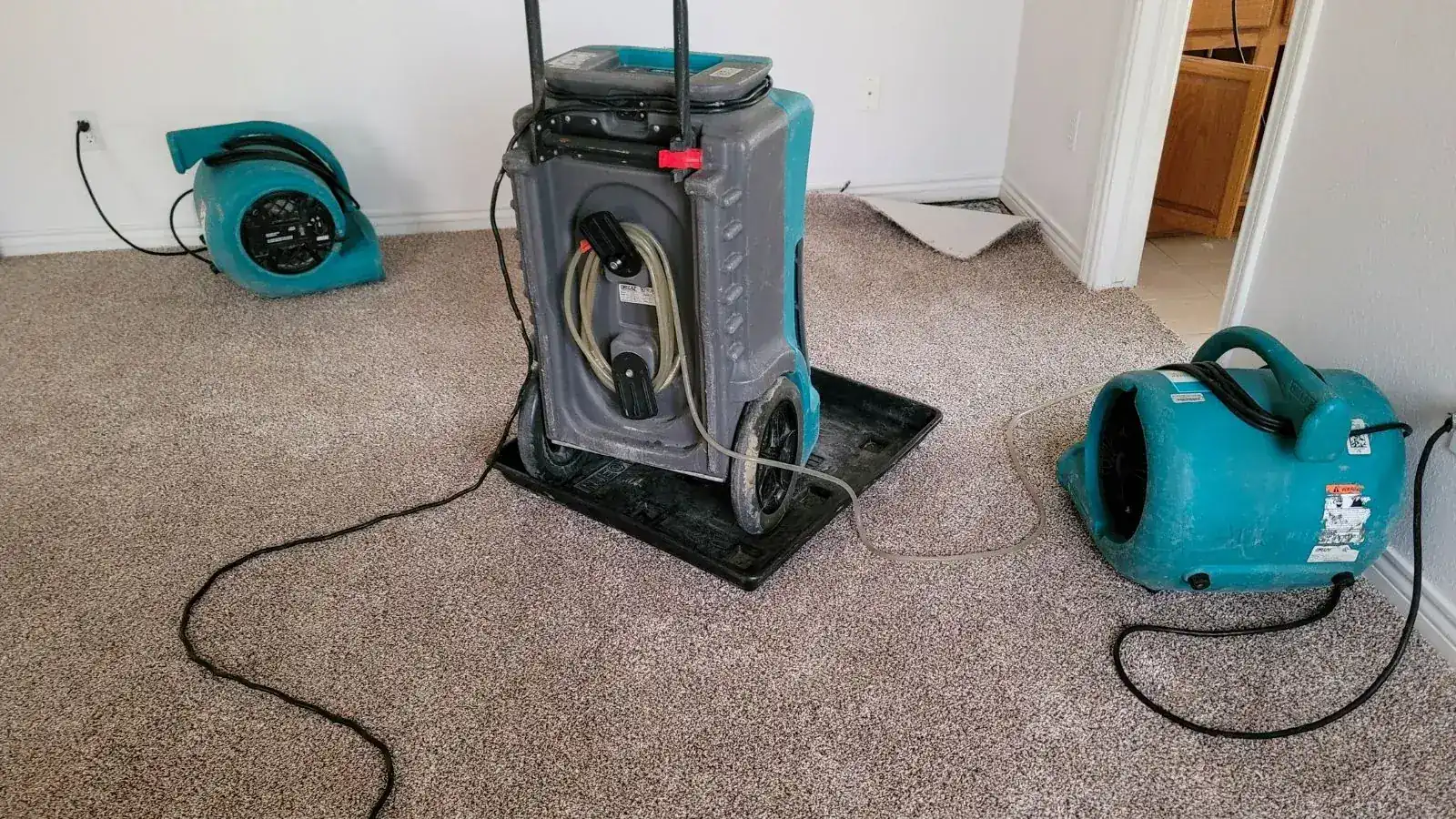
Drying is the longest stage and the one most homeowners underestimate. Air movers push dry air across surfaces, dehumidifiers pull moisture out of the air and meters track whether wood, drywall and concrete are returning to normal readings. Crews check daily, move equipment and adjust until the structure meets a drying goal. The details are on our water mitigation page.
Opening a wall, drilling small holes at the baseboard or lifting flooring edges can let air reach wet cavities. It looks disruptive, but a wall that feels dry on the outside can still be wet behind the paint. EPA says to dry water-damaged areas within 24 to 48 hours to prevent mold growth.
Stage Five: Cleaning, Sanitizing And Odor Control
After drying, surfaces that stayed in place are cleaned. For contaminated water, that includes disinfecting, and for smoke or musty odors it can include air scrubbing with HEPA filtration. Contents such as furniture and clothing are sorted into items to clean, items to dispose of and items to hold for your insurer. This is where water damage cleanup fits into the sequence.
Stage Six: Repair And Rebuild
Rebuilding is the part everyone can see: new drywall, insulation, flooring, trim and paint. It begins only once the structure is dry and any mold is controlled. Some companies do both stages and some only the first, so ask who handles the rebuild. See water damage repair for how that stage is scoped.
A checklist for judging a restoration plan
- The plan names the water category and explains why.
- Drying equipment and monitoring are included in the scope.
- It says which materials will be removed and why.
- Rebuild is either included or clearly separated.
- You receive scope and price before work starts.
Why Acton Homes Need Drying, Not Just Mopping
Acton's 2018 hazard mitigation plan reports average annual snowfall of 48 to 72 inches, and the freeze and thaw cycle is when supply lines in outside walls and unheated spaces give way. A small leak inside a wall can run for days before a stain shows.
The same plan notes that about 10 percent of housing units were built before 1940. Older plaster walls and original framing hold moisture differently than modern drywall, and drying plans for them are slower and more careful.
A Typical Timeline
| Time | What usually happens |
|---|---|
| First hours | Source stopped, standing water extracted, wet materials removed, equipment set |
| Days 1 to 3 | Air movers and dehumidifiers run while crews check moisture daily |
| Days 3 to 5 | Readings approach normal and equipment is removed when the structure meets its goal |
| After drying | Cleaning, repairs and rebuild are scheduled |
Timelines vary with materials, the amount of water and building conditions. A technician sets the goal on site.
Drying time depends on what got wet. Thin drywall dries faster than thick plaster, and carpet dries faster than hardwood or a concrete slab. Deep, hidden moisture takes longer than a surface spill, which is why a technician takes readings instead of guessing.
Choosing A Restoration Company
Questions worth asking before you agree
- Will the crew explain scope and price before work starts?
- How is the water category decided and documented?
- What drying goal will be used, and how will you see the readings?
- Which materials will be removed, and why?
- Who handles the rebuild, and is it priced separately?
- How will the company help with documentation for your insurer?
What Insurance And Paperwork Look Like
Most homeowners deal with an insurer during a loss. The Massachusetts Division of Insurance says sudden interior water damage may be treated differently from a gradual problem, and that flood damage and sewer backup are generally excluded unless you added coverage. Photograph everything before cleanup begins, keep damaged items until your insurer says otherwise and save every receipt.
Neighboring communities follow the same sequence, whether it is a burst pipe in Concord or a basement seep in Boxborough. The stages stay the same and the details change with the building.
Questions Acton Homeowners Ask
Stopping the source, classifying the water, extracting standing water, removing unsalvageable materials, drying the structure, cleaning and sanitizing, monitoring and then repairing or rebuilding.
Extraction can take hours. Drying commonly takes several days depending on materials and the amount of water, and rebuilding is separate. A technician can estimate after seeing the loss.
Yes. Restoration removes water and dries the structure. Repair rebuilds finishes that were removed or damaged. Some companies do both.
Clean water comes from supply lines. Gray and black water carry contaminants and require more careful removal and disinfection.
The line is answered 24/7, and same-day response is offered when available.
Water Damage In Your Acton Home?
If water is spreading or you are weighing next steps, call the 24/7 line and ask questions before you decide.
☎ Call (978) 252-8637